
The Ultimate Solar Panel Maintenance Checklist for UK Homeowners in 2026
- James

- 1 hour ago
- 13 min read
Your solar array is more than just a collection of glass and silicon; it's a high-yield asset designed to power your home for a quarter of a century. Whilst these systems are remarkably resilient, ignoring them can lead to a quiet, expensive decline in efficiency that eats away at your energy savings. You've likely felt that nagging uncertainty when looking at your monitor, wondering if the UK's unpredictable weather is hampering your output or if a DIY cleaning attempt might accidentally void your manufacturer's warranty. It's a common concern amongst the thousands of households who've joined the national transition to renewable energy.
This comprehensive solar panel maintenance checklist for homeowners provides the clarity you need to manage your system with professional confidence. We'll outline a precise seasonal strategy to keep your panels at peak performance, ensuring you continue to benefit from the 0% VAT incentives and lucrative Smart Export Guarantee rates available in 2026. This guide moves from simple visual inspections to professional health checks, giving you a clear roadmap for system longevity and significantly lower energy bills.
Key Takeaways
Shift your perspective from reactive repairs to proactive asset management to safeguard your 25-year energy investment.
Utilise our comprehensive solar panel maintenance checklist for homeowners to establish a seasonal rhythm of ground-level visual inspections.
Learn to identify the boundary between safe homeowner observation and technical tasks that require professional thermal imaging and electrical testing.
Discover how to diagnose "silent" failures and sudden performance drops that could otherwise compromise your system's efficiency.
Understand how maintaining your solar PV array directly optimises the performance of your entire energy ecosystem, including battery storage and heat pumps.
Table of Contents
Why Solar Panel Maintenance is Essential for UK Homeowners in 2026
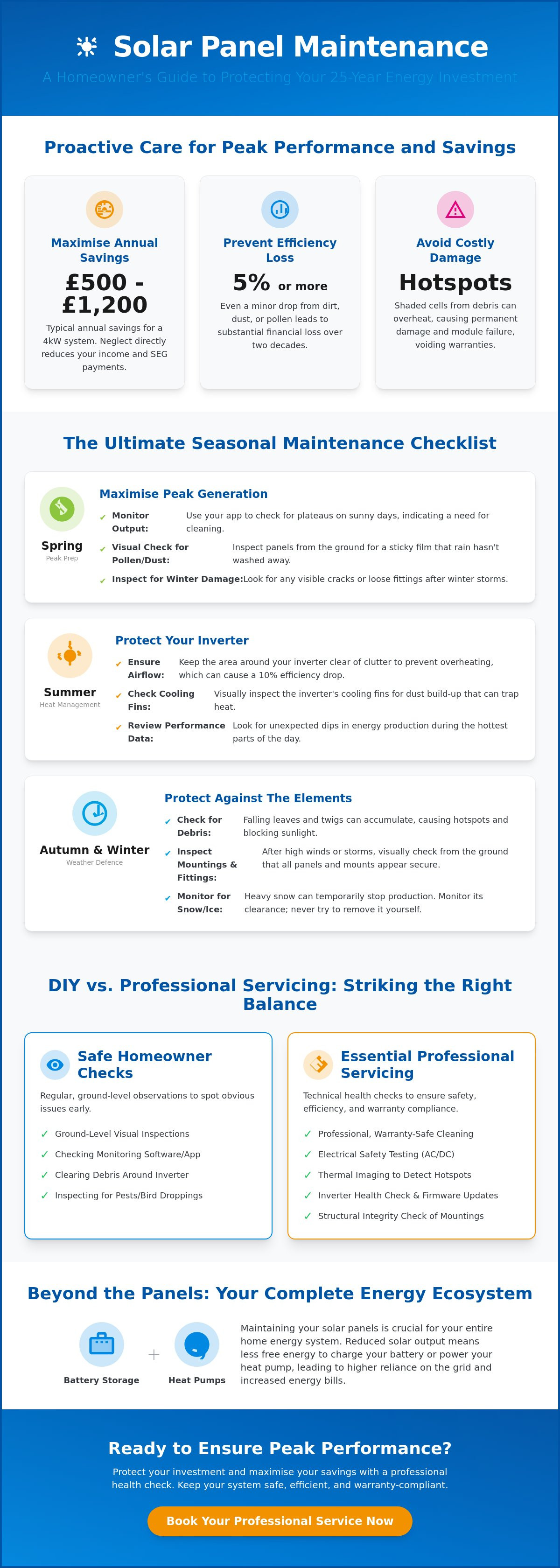
Your solar array is a high-performance power plant on your roof. Treating it as a "fit and forget" technology is a mistake that can cost thousands over its lifespan. In 2026, as we accelerate the national transition towards a cleaner grid, maintaining your system is about proactive asset management rather than reactive repair. A well-kept system secures your energy independence for 25 years or more. Even a minor 5% drop in efficiency, often caused by invisible grime or bird droppings, leads to substantial financial losses when compounded over two decades.
The British climate presents specific challenges for Solar panel technology. Coastal homes contend with corrosive salt mist, whilst urban properties face a steady build-up of industrial soot and traffic film. These elements don't just block light. They can degrade the protective seals and frames. Following a regular solar panel maintenance checklist for homeowners ensures these environmental stressors don't turn into permanent hardware failures. It's the primary way to keep your manufacturer warranties and home insurance policies valid, as most providers require evidence of professional care.
The Financial Impact of Neglect
Small amounts of debris create disproportionate problems. When a section of a panel is shaded by dirt, the unshaded cells try to push current through the obstructed ones, creating "hotspots." These areas of intense heat can permanently damage the silicon cells, leading to a total failure of the module. Annual servicing is a small investment compared to the cost of replacing an entire string of panels or a faulty inverter. Keeping your system at peak performance ensures you maximise your annual savings. For a typical 4kW system, these savings range between £500 and £1,200.
Protecting Your MCS Accreditation Status
Professional maintenance records are vital when you decide to sell your home. Buyers now view renewable energy installations as a core part of a property's value. They want to see that the system has been cared for by experts. Keeping detailed logs also supports your ongoing Smart Export Guarantee (SEG) payments. Some energy suppliers now offer export rates as high as 32.17p/kWh for MCS-certified systems. If your panels underperform, you're directly reducing your monthly income. A reliable solar panel maintenance checklist for homeowners acts as your financial safeguard, keeping your system compliant and your returns high.
The Ultimate Seasonal Solar Panel Maintenance Checklist
British weather is a cycle of extremes that demands a rhythmic approach to asset management. Your solar panel maintenance checklist for homeowners should follow the cadence of the seasons, ensuring your technology is prepared for both the low-sun intensity of winter and the high-production peaks of summer. This isn't merely about keeping the glass clear. It is a total system approach that considers the structural integrity of the mounting, the ventilation of the inverter, and the health of the electrical connections. Most of these checks are safe, visual inspections you can perform from the safety of the ground with a pair of binoculars.
Spring and Summer: Maximising Peak Generation
Spring is the season of renewal and, unfortunately, heavy agricultural residue. For homeowners in Nottinghamshire and Lincolnshire, the combination of industrial dust and rural pollen creates a sticky film that rain often fails to wash away. This "cementing" effect can significantly shroud your cells just as the sun reaches its highest point in the sky. Use your monitoring app to track daily output; a sudden plateau during a clear day is a primary indicator that a gentle clean is required.
During summer heatwaves, the focus shifts to your inverter. These units are the brains of the operation and can suffer from "derating" if they overheat. Ensure the area around your inverter is clear of domestic clutter to allow for maximum airflow. Check the cooling fins for dust build-up, as stilled air can lead to a 10% reduction in conversion efficiency during the hottest months. Whilst visual checks are your first line of defence, a professional maintenance and servicing visit ensures the hidden electrical components remain within manufacturer specifications.
Autumn and Winter: Protecting Against the Elements
Autumn brings the dual threat of falling leaves and opportunistic wildlife. Debris trapped behind the panels can hold moisture against your roof, leading to rot or moss growth. Perhaps more importantly, starlings and pigeons often view the warm space beneath the panels as an ideal nesting site. Their presence isn't just a nuisance; it can lead to acidic damage to the cabling and mounting hardware. A quick check from the garden will reveal if you have any unwanted tenants or blockages in your roof's drainage paths.
Winter is the season of structural stress. High-wind storms, common across South Yorkshire and the East Midlands, can put immense pressure on the mounting brackets. Once the storm passes, use your solar panel maintenance checklist for homeowners to verify that the array remains perfectly aligned. Look for any signs of "lifting" or loose cables that may have been whipped by the wind. Frost build-up is rarely an issue for the panels themselves, but you must ensure that melting ice can drain freely away from the electrical housing to prevent water ingress during the thaw.
DIY Inspection vs Professional Servicing: Striking the Right Balance
Ownership of a solar PV system carries a unique sense of pride. You are no longer just a consumer; you are a micro-generator contributing to a critical national transition. However, this role requires a clear understanding of where your involvement ends and professional expertise begins. Safety is non-negotiable. Whilst a solar panel maintenance checklist for homeowners is an invaluable tool for routine observation, it is not a manual for electrical intervention. Attempting to dismantle components or climb onto your roof without specialist training can lead to catastrophic hardware failure or personal injury.
The boundary is defined by the difference between "visual status" and "technical integrity." You are the first responder for your home's energy ecosystem, but the engineer is the specialist who ensures the system remains compliant with the strict standards of the Microgeneration Certification Scheme (MCS). Beyond the physical risks, many UK home insurance policies include "working at height" exclusions for non-professionals. Stepping onto your roof to clean a panel could inadvertently void your cover, leaving you vulnerable to the full cost of any accidental damage to the tiles or the array itself.
What You Can Safely Do Yourself
Your primary responsibility is the consistent monitoring of system health from ground level. This proactive behaviour allows you to catch issues before they escalate into expensive repairs. Safe DIY tasks include:
Visual inspections: Use binoculars to check for cracked glass, discoloured cells, or sagging cables from the safety of your garden.
Inverter status checks: Regularly verify that your inverter or battery storage unit displays a solid green light, indicating normal operation.
Performance tracking: Use your manufacturer's app to cross-reference your current generation against historical data for the same month.
Low-pressure rinsing: If you notice a build-up of loose dust, a gentle hose-down from the ground using only water is sufficient. Never use pressure washers or abrasive chemicals, as these can strip the anti-reflective coating from the glass.
Why Professional Servicing is Non-Negotiable
Professional servicing is a strategic audit of your 25-year investment. Engineers utilise specialised equipment, such as thermal imaging cameras, to detect "hotspots" that are invisible to the naked eye but indicate internal cell degradation. These technical health checks go deep into the system's architecture, performing tasks that are impossible for a homeowner to manage safely. A professional visit typically involves testing DC string voltages and insulation resistance to ensure there are no "leaks" in your electrical harvest.
Furthermore, an engineer will torque-test every mounting bracket. The thermal expansion and contraction caused by the British climate can gradually loosen these fixings over several years. Ensuring they remain secure is vital for storm resilience. Finally, a professional service includes critical firmware updates for your inverter. These updates ensure your system remains compatible with evolving grid requirements and continues to maximise your Smart Export Guarantee (SEG) revenue. By following a solar panel maintenance checklist for homeowners for daily checks and booking an annual professional service, you ensure your system remains a high-performing, safe, and fully insured asset.
Identifying Common Faults: A Homeowner’s Troubleshooting Guide
Solar PV systems are celebrated for their lack of moving parts, yet they are not immune to "silent" failures. These are the subtle performance dips that don't trigger an alarm but quietly erode your return on investment. A sudden 10% drop in generation might seem like a cloudy week, but it could be the first sign of a failing string or a dirty sensor. By integrating a solar panel maintenance checklist for homeowners into your monthly routine, you can distinguish between natural weather variance and a genuine hardware fault. Early detection is the key to preventing a minor glitch from becoming a total system shutdown.
The inverter remains the most hardworking component of your energy ecosystem. It is the heart of the system, constantly converting DC energy from your roof into usable AC power for your home. Because it handles high voltages and manages heat, it is often the first part to show signs of wear. Beyond the inverter, physical threats from the local environment can compromise your array's integrity. In the East Midlands and South Yorkshire, the mixture of industrial dust and rural pollen can create a "shading film" that triggers internal bypass diodes, reducing your total output even in bright sunshine.
Spotting Inverter Issues and Error Codes
Most modern inverters use a simple traffic light system to communicate their health. A solid green light is your goal. An amber light typically indicates a non-critical warning, such as a temporary loss of Wi-Fi connectivity or a minor grid fluctuation. However, a red light signals a critical fault that requires immediate attention. If your monitoring app goes offline, you can often resolve the issue with a safe system reboot: turn off the AC isolator first, followed by the DC isolator. Wait for 60 seconds before reversing the process to allow the internal capacitors to discharge. Solar clipping occurs when your panels produce more power than the inverter is rated to handle, causing a flat-topped generation curve on your app during peak summer hours.
Environmental and Biological Threats
Shading is rarely a static problem. A tree that was well clear of your roof three years ago may now be casting a "micro-shade" across a single row of cells. Because panels are often wired in series, shading just one cell can throttle the performance of the entire string. Wildlife presents a more direct threat. Squirrels and rats are attracted to the warmth beneath the panels and have been known to chew through exposed DC cabling, creating a significant fire risk. Pigeons are an equally persistent nuisance, as their nesting material blocks airflow and their acidic droppings can etch the glass over time. If you suspect your system has become a habitat for local wildlife, it's time to book a professional Maintenance & Servicing visit to install bird proofing and verify cable integrity.
Beyond the Panels: Maintaining Your Complete Home Energy Ecosystem
The era of standalone domestic technology is over. Your property is now a sophisticated, integrated energy system where each component relies on the performance of the next. If your solar array is underperforming due to neglect, the rest of your infrastructure must work harder, often drawing expensive power from the national grid to compensate. Viewing your setup as a whole ensures your solar panel maintenance checklist for homeowners covers every link in the chain. A holistic approach to maintenance isn't just about cleaning glass; it's about optimising the flow of energy from the sun to your appliances and storage units.
This ecosystem requires a rhythmic, annual audit to ensure all parts are communicating effectively. As we move deeper into 2026, the complexity of home energy management continues to grow, making proactive care more important than ever. By synchronising the care of your panels with your storage and heating systems, you create a narrative of reliability and efficiency. This strategy protects your long-term investment and ensures that your home remains a beacon of the UK's renewable transition.
Solar and Air Source Heat Pump Synergy
Peak solar output is the lifeblood of an efficient air source heat pump. During the colder months, every watt of self-generated electricity counts towards reducing your heating bills. If your panels are shrouded in winter grime or autumn leaves, your heat pump is forced to rely on the grid during its most demanding periods. Clean panels maximise the available energy to pre-heat water or run your heating cycles, significantly reducing the 'grid-draw' during the challenging winter months. Aligning your seasonal solar checks with your heat pump's annual service creates a streamlined maintenance schedule that guarantees comfort and performance.
Battery Storage Maintenance and Health
Your battery storage unit is the warehouse for your solar harvest, and its health is paramount for energy independence. Maintenance for these units involves more than just a visual check. You must regularly monitor the state-of-health (SOH) through your management app to ensure the cells are holding their charge as expected. It is also vital to keep the installation area within optimal operating temperatures, as extreme cold or heat can prematurely age the battery chemistry. Verifying that your solar-to-battery charge priority is still correctly configured ensures that your generated power isn't being wasted or exported prematurely.
Managing these interlocking technologies can be complex, but you don't have to do it alone. For homeowners who want to ensure their entire system is operating at its theoretical maximum, contacting Qualis Energy for a comprehensive system optimisation review is a wise move. Our experts can perform a deep-dive audit, ensuring your solar panel maintenance checklist for homeowners is backed by professional technical oversight. This total-system perspective is what separates a standard home from a future-proofed energy asset.
Securing Your Energy Legacy for the Decades Ahead
Your solar array is a permanent fixture in the UK's renewable landscape. By adopting a consistent solar panel maintenance checklist for homeowners, you transform a piece of technology into a reliable, high-yield asset. We've explored how seasonal rhythm and the balance between ground-level observation and professional technical audits safeguard your efficiency. This proactive approach ensures your system continues to deliver maximum returns whilst supporting the wider health of your heat pump and battery storage units.
Ready to guarantee your system's peak performance? Book your professional 2026 solar health check with Qualis Energy today. Our MCS Accredited Installers provide local expertise across Nottingham and Sheffield, conducting a comprehensive 50-point system inspection that goes far beyond the surface. You've made the investment; now let's ensure it performs exactly as intended. Take pride in your contribution to a greener Britain and enjoy the peace of mind that comes with a perfectly optimised home.
Frequently Asked Questions
How often should I clean my solar panels in the UK?
Most UK homeowners find that a professional clean once or twice a year is sufficient to maintain peak efficiency. Properties located in high-traffic urban areas or near agricultural land in the East Midlands may require more frequent attention due to the heavier build-up of soot and pollen. Consistent monitoring of your system's output will reveal when a layer of grime is beginning to hamper your generation.
Do I need to turn off my solar panels to clean them?
Safety is the absolute priority when managing high-voltage electrical equipment. You must always shut down the system using the correct isolation sequence before attempting any cleaning activity. This removes the risk of electrical shock and prevents the glass from experiencing thermal shock, which can occur if cold water is applied to panels that have been heating up in the sun all day.
Can I use a pressure washer to clean my solar panels?
Never use a pressure washer on your solar array. The extreme force of the water jet can compromise the delicate anti-reflective coating on the glass or force water past the protective seals into the electrical housing. Stick to low-pressure water from a garden hose and a soft, non-abrasive brush to maintain the structural and technical integrity of your investment.
What happens if snow covers my solar panels in winter?
Snow is rarely a long-term problem for UK solar installations because the panels are tilted and generate a small amount of heat during operation. This combination usually causes snow to slide off naturally once the thaw begins. Whilst generation is blocked whilst the panels are covered, you should avoid using hard tools to scrape them, as this can cause permanent scratches to the glass.
How do I know if my solar panels are underperforming?
The most effective way to spot a drop in performance is to cross-reference your current generation data with historical records for the same month in previous years. If you notice a significant decline that cannot be explained by weather patterns, consult your solar panel maintenance checklist for homeowners to identify potential issues. Sudden plateaus in generation often indicate shading or a fault within the inverter.
Does rain clean solar panels effectively in the UK?
Whilst rain provides a basic rinse for loose dust, it is not a substitute for a dedicated clean. In the UK, light rain often mixes with existing dust to create a sticky film or "mud" that obscures the cells rather than clearing them. A manual clean is necessary to remove stubborn industrial residues and agricultural film that rain alone cannot shift.
Will bird droppings damage my solar panels permanently?
Bird droppings represent a significant biological threat and can cause permanent damage if left unaddressed. The acidic nature of the waste can etch the glass surface, whilst the shade it creates can lead to "hotspots" that permanently degrade the internal silicon cells. Regular visual checks are essential to ensure these small obstructions don't lead to expensive hardware failures.
How much does a professional solar panel service cost in 2026?
Professional servicing costs in 2026 are determined by the scale of your installation and the complexity of your integrated energy ecosystem. This annual health check is a strategic investment that ensures your system remains compliant with manufacturer warranties and continues to qualify for the best Smart Export Guarantee rates. It provides a level of technical depth, including thermal imaging and electrical testing, that visual inspections alone cannot match.

Comments